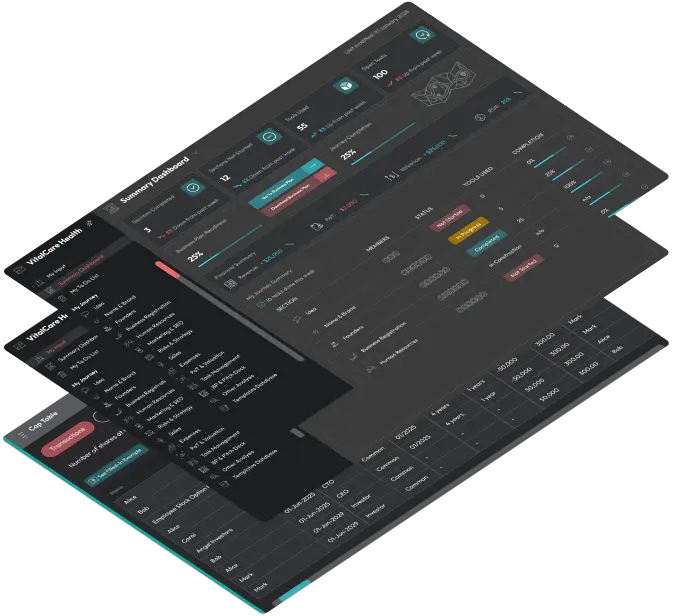
Brewery Business Plan Template

What You Get with This Template

Executive summary

Executive summary

Market analysis

Market analysis

Revenue model

Revenue model

Cost Structure

Cost Structure

Financial projections

Financial projections

Funding strategy

Funding strategy

Risk analysis

Risk analysis

Production planning

Production planning

What Makes a
Strong Brewery Business Plan

A strong Brewery Business Plan goes beyond passion for craft beer. Investors and lenders focus on operational scalability, capital intensity, and cash flow stability.
First, the revenue model must clearly distinguish between on-premise taproom sales, wholesale distribution, contract brewing, and packaged retail. Each channel carries different margins, working capital requirements, and sales cycles. A credible plan demonstrates how channel mix impacts gross margin and cash conversion timing.
Second, production capacity planning must be aligned with demand assumptions. Fermentation tank turnover rates, brewhouse capacity utilization, and inventory aging directly affect revenue ceilings and capital expenditure timing. Overestimating demand while underutilizing equipment is a common failure point.
Third, gross margin clarity is critical. Ingredient costs (malt, hops, yeast), packaging (cans, bottles, kegs), excise taxes, and distribution fees must be modeled per barrel. Lenders especially will scrutinize contribution margins and debt service coverage ratios.
Finally, a compelling brewery plan demonstrates brand positioning within a saturated market. Differentiation, pricing power, and local market penetration strategy must be logically connected to financial forecasts.
What Makes a

Industry-Specific
Financial Planning Considerations

Breweries are asset-heavy businesses with layered cost structures.
Financial modeling must reflect:

Capital Expenditure (CapEx)

Capital Expenditure (CapEx)

Brewhouse equipment, fermentation tanks, glycol systems, canning lines, cold storage, and taproom build-out represent significant upfront investment. Depreciation schedules and financing structure materially impact early-year profitability.

Working Capital Cycles

Working Capital Cycles

Brewing requires inventory holding periods before revenue realization. Raw materials convert into in-process fermentation, then finished goods inventory. Distribution adds further receivables lag. Cash flow projections must reflect this timing gap.

Margin Compression Risks

Margin Compression Risks

Ingredient price volatility, aluminum can pricing shifts, and distributor margin pressure can significantly erode gross margins. Sensitivity analysis on COGS per barrel is essential.

Channel Economics

Channel Economics

Taproom sales often deliver 65–75%+ gross margins, while wholesale may fall closer to 25–40% depending on distributor agreements. A sustainable model often depends on a profitable direct-to-consumer foundation before scaling distribution.

Debt Structuring

Debt Structuring

Traditional breweries often rely on SBA or commercial loans. Your projections must clearly demonstrate debt service coverage, breakeven barrel volume, and conservative ramp-up assumptions.

Common Mistakes
in Brewery Business Plans

01

Overestimating early demand.

Production capacity does not equal market demand. Forecasts must reflect realistic taproom foot traffic and distribution velocity.

02

Underestimating operating costs.

Utilities, waste disposal, compliance, quality control, and equipment maintenance are frequently understated.

03

Ignoring working capital strain.

Inventory buildup before distribution expansion can create liquidity pressure even in profitable operations.

04

Misaligned scaling strategy.

Expanding into distribution too early can dilute margins and stretch cash flow.

05

Weak financial logic

Generic revenue projections without per-barrel economics or channel-level modeling undermine investor confidence.

Why Use PrometAI
for Your Brewery Business Plan

PrometAI structures your Brewery Business Plan around investor-grade financial logic rather than generic templates.
It helps you:

  • Model revenue by sales channel

  • Align capacity with demand forecasts

  • Stress-test margin sensitivity

  • Structure debt vs. equity funding scenarios

  • Validate breakeven production levels

  • Present lender-ready financial statements

Instead of assembling disconnected spreadsheets, you build a coherent, data-driven plan aligned with brewery-specific realities and funding expectations.

Why Use PrometAI

Example Structure of a Brewery Business Plan

Below is a condensed example based on an actual brewery business plan. It illustrates how founders typically structure their strategy, operations, and financial outlook when presenting a brewery venture to investors or partners.

Sections

Market Opportunity & Target Customers

A strong brewery business plan outlines the customer segments it intends to serve and explains why demand exists for its products. Understanding the audience is essential for defining both marketing strategy and distribution channels.

Example

AleWorks targets several customer groups including craft beer enthusiasts, local community members, restaurants and pubs seeking distinctive beverage offerings, tourists interested in brewery experiences, and retailers looking for unique craft beer products.
The brewery also aims to attract environmentally conscious consumers by emphasizing sustainability and local sourcing of ingredients, strengthening its connection with responsible consumption trends.

Growth Strategy & Development Phases

Read More

FAQs